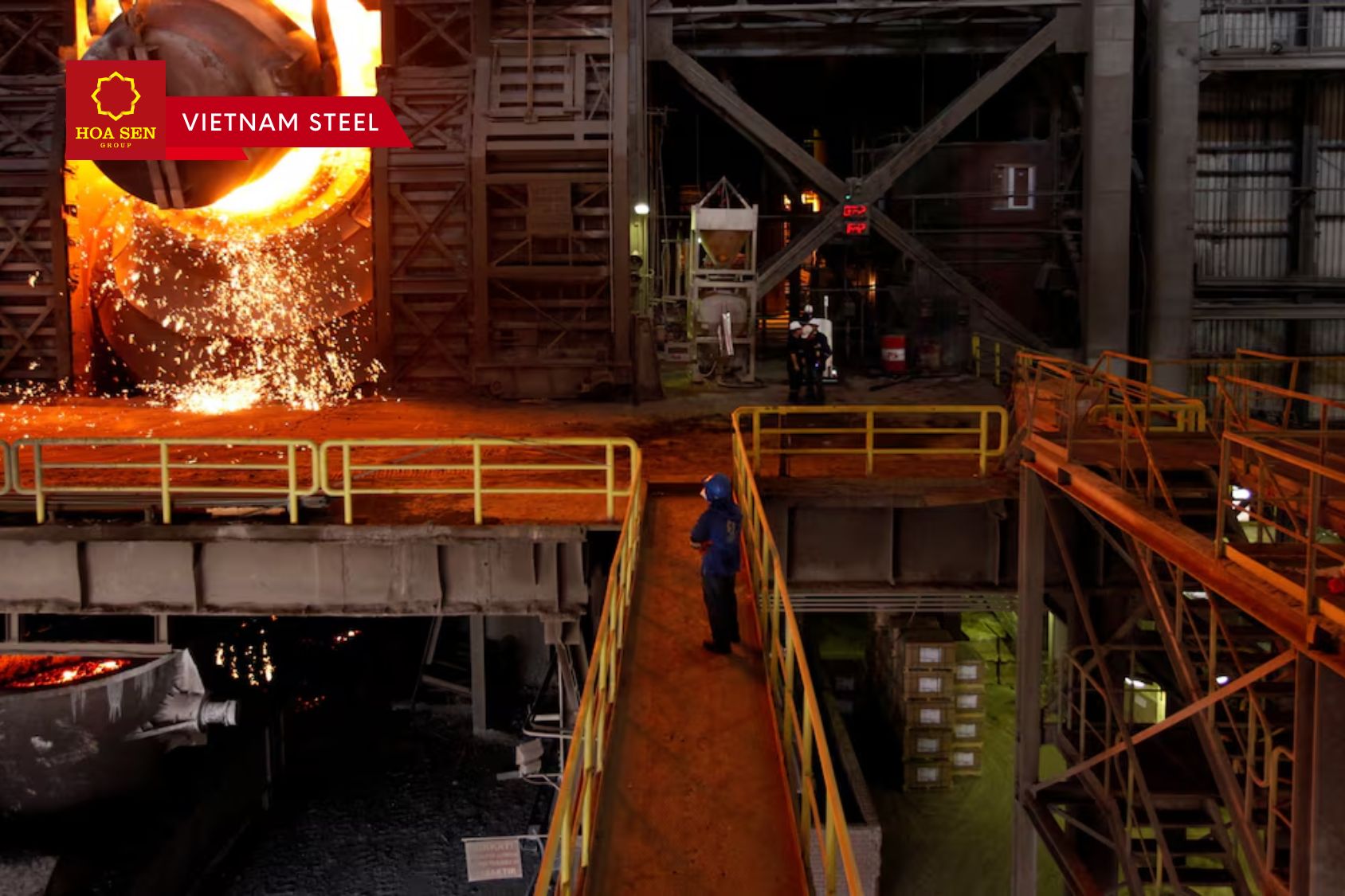
The Institute for Energy Economics and Financial Analysis (IEEFA) has urged BHP to shift its steel decarbonization strategy by prioritizing direct reduced iron (DRI) technologies over carbon capture, utilization and storage (CCUS).
According to IEEFA, BHP generated 378 million metric tons of Scope 3 emissions in fiscal year 2025, yet its current strategy continues to focus on technologies that support blast furnace steelmaking and metallurgical coal. The organization argues that DRI has become the leading pathway for reducing steelmaking emissions, while CCUS has yet to demonstrate commercial viability in coal-based steel production.
IEEFA noted that no commercial-scale CCUS facilities are currently operating in metallurgical coal-based steelmaking. It also highlighted that the International Energy Agency expects CCUS to contribute less than 5% of global emissions reductions by 2050, raising concerns over its long-term effectiveness.
The report acknowledged BHP's participation in DRI-related initiatives, including the NeoSmelt project, which is expected to make a final investment decision in the second half of 2026, with commercial operations targeted for 2029. However, IEEFA believes BHP should accelerate investments in DRI-compatible technologies to better align with the global transition toward low-carbon steelmaking.
VietnamSteel by Hoa Sen Group
IEEFA Calls on BHP to Prioritize DRI Technology Over CCUS for Steel Decarbonization
26 junio, 2026
por
Administrator