Researchers from India and Australia have developed a new method that could significantly reduce emissions from steel production by partially replacing coal with agricultural waste.
The technology was developed through collaboration between Australia’s national science agency CSIRO and the Indian Institute of Science (IIS) and has already been tested under industrial operating conditions.
According to a joint statement, the approach demonstrates that biomass-based materials can be integrated into steelmaking processes without affecting operational performance, offering a potential pathway for reducing emissions in one of the world’s most carbon-intensive industries.
The global steel sector currently accounts for around 10 percent of total global carbon emissions, making the development of low-carbon technologies a key priority.
During the research project, scientists used rice husk pellets, a common agricultural waste product in India, as a biomass input.
The CSIRO team successfully validated the continuous production of biomass-derived synthesis gas used for iron ore reduction at a large commercial steel plant.
The project was carried out in collaboration with Rescon Solutions, a steel innovation company supported by the IIS Foundation for Science and Innovation and Development.
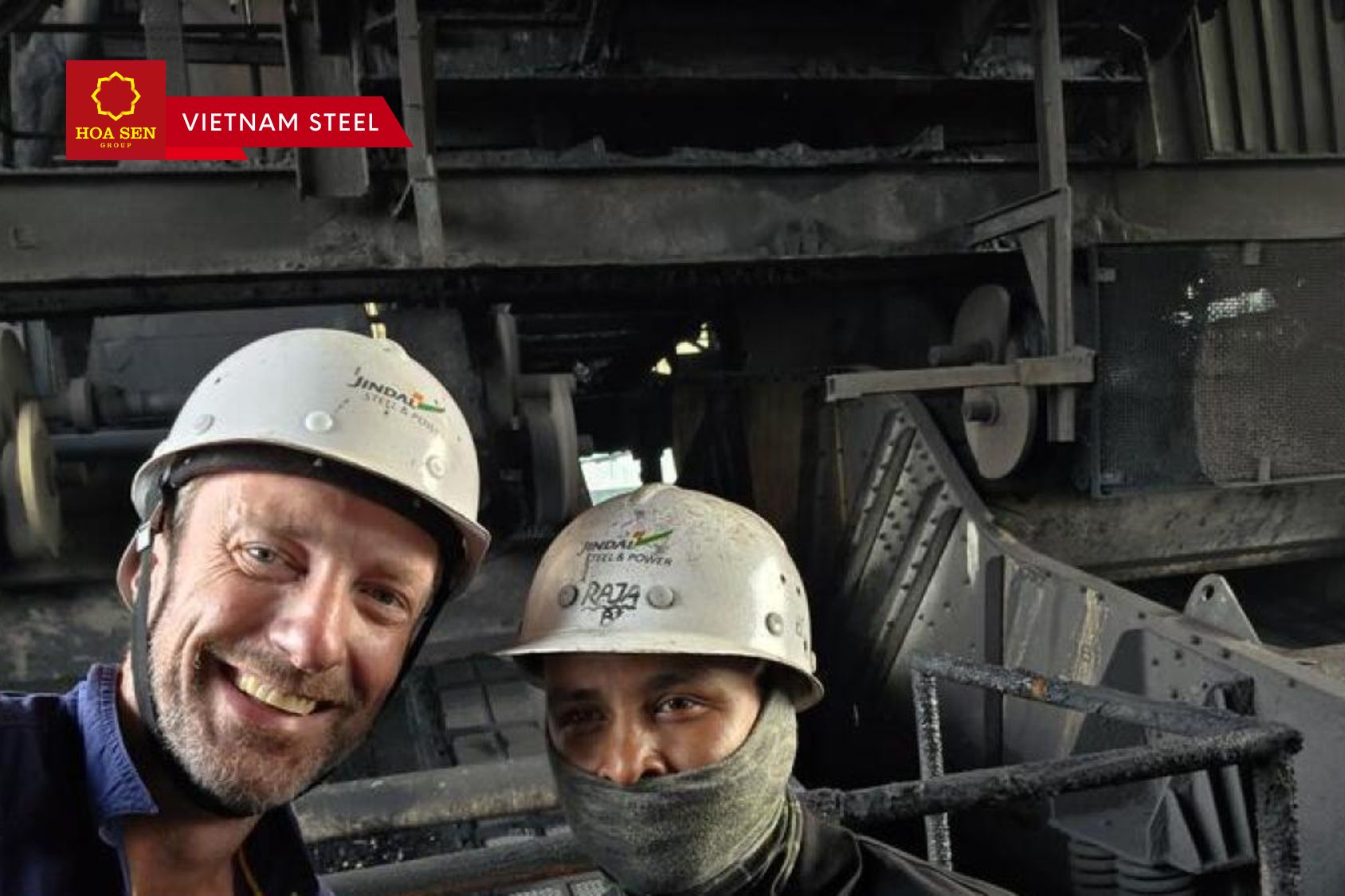
A full-scale industrial trial was conducted at Jindal Steel’s plant in Odisha, India.
During the trial, researchers blended 5 percent and 10 percent rice husk pellets into the plant’s gasifiers, achieving stable synthesis gas production without any loss in operational performance.
The results demonstrate that agricultural waste could potentially be integrated into existing steelmaking infrastructure.
This development is particularly significant for India, where the steel sector accounts for around 12 percent of the country’s total emissions.
The high emission intensity is largely due to coal-based production processes and the widespread use of rotary kiln direct reduced iron (DRI) plants.
According to the research team, if the technology were implemented across India’s steel industry, it could reduce emissions by up to 50 percent, equivalent to approximately 357 million metric tons of CO₂ per year.
VietnamSteel by Hoa Sen Group
